
Butternut squash risotto is one of those dishes that feels impossibly luxurious for something made from such humble ingredients. The squash melts into the rice, creating a sauce that is naturally sweet, deeply savory, and unbelievably creamy all without adding a drop of cream. This is the magic of properly made risotto: the constant stirring coaxes the starch out of the Arborio rice, creating a sauce from within the rice itself that binds everything together into something that feels both hearty and elegant at once.

Risotto has an unjust reputation for being difficult and labor-intensive. Yes, it requires attention and about 25-30 minutes of active stirring at the stove but it’s genuinely not difficult. Once you understand the technique, it becomes almost meditative. You stand at the stove, ladle by ladle, watching the rice absorb the warm broth and slowly swell into something silky and spectacular. It’s one of those cooking techniques that genuinely makes you feel accomplished every single time.
This particular recipe is my fall favorite. The butternut squash is roasted separately until caramelized and tender, which gives it a concentrated, almost nutty sweetness that can’t be achieved by simply simmering it in the risotto. Half of the squash gets stirred into the risotto directly, where it breaks down and becomes part of the sauce. The other half is kept in beautiful chunks and arranged on top for texture and presentation. Crispy sage leaves fried in brown butter and a generous shower of Parmigiano-Reggiano complete the picture.
The Technique of Perfect Risotto
The key to extraordinary risotto is understanding a few core principles. First, warm your broth. Adding cold broth to hot rice drops the temperature dramatically and disrupts the cooking. Keep your broth in a separate pot on low heat throughout the entire cooking process.
Second, the soffritto the initial sauté of shallots and garlic in butter and olive oil is the flavor foundation. Don’t rush it. Cook the shallots until completely translucent and soft, about 5-6 minutes over medium-low heat. This creates the sweet, savory base that everything else builds upon.
Third, toast the rice. Adding the Arborio to the soffritto and toasting it for 2 minutes in the fat before any liquid is added creates a shell around each grain that helps it maintain some bite in the finished dish while still releasing starch as it cooks. You’ll see the edges of the rice become slightly translucent that’s the visual cue that toasting is complete.
Fourth, the wine. A splash of dry white wine added after the rice toasting evaporates quickly, leaving behind its fruity acidity which balances the richness of the final dish. Use wine you’d enjoy drinking the better the wine, the better the risotto.
Fifth, add broth gradually and stir constantly. Add one ladleful of warm broth at a time, stirring almost continuously. Wait until each addition is almost fully absorbed before adding the next. This constant movement is what coaxes the starch out of the rice and creates the characteristic creaminess. It takes patience, but it’s deeply satisfying to watch the transformation happen.
Finally, the mantecatura the final step of vigorously stirring in cold butter and Parmesan off the heat. This is the step that elevates good risotto to great risotto. The cold butter emulsifies into the starchy rice liquid, creating a glossy, intensely creamy final sauce.
Ingredients
- 1 medium butternut squash (about 2 lbs), peeled, seeded, and cut into 3/4-inch cubes
- 3 tbsp olive oil, divided
- 1.5 cups Arborio rice do not substitute regular long-grain rice
- 2 medium shallots, finely diced shallots have a sweeter, more delicate flavor than onion
- 4 garlic cloves, minced
- 1/2 cup dry white wine Pinot Grigio or Sauvignon Blanc work well
- 5-6 cups warm chicken or vegetable broth, kept hot in a separate pot
- 4 tbsp cold unsalted butter, divided 2 tbsp for cooking, 2 tbsp cold for the mantecatura
- 1 cup Parmigiano-Reggiano, freshly grated the real thing, not pre-grated
- 1/4 tsp freshly grated nutmeg
- 1 tsp fresh thyme leaves
- Salt and white pepper to taste
For the crispy sage brown butter:
- 4 tbsp unsalted butter
- 12-15 fresh sage leaves
- Pinch of salt
Step-by-Step Instructions
- Roast the squash: Preheat oven to 425°F (220°C). Toss butternut squash cubes with 2 tbsp olive oil, salt, pepper, and fresh thyme. Spread in a single layer on a baking sheet. Roast for 25-30 minutes until golden at the edges and completely tender. Set aside you’ll use half of it in the risotto and half on top.
- Warm your broth: Pour broth into a medium saucepan and keep it at a bare simmer over low heat. Keep a ladle nearby throughout the risotto cooking process.
- Start the risotto base: In a wide, heavy-bottomed pot or Dutch oven, heat 2 tbsp butter and 1 tbsp olive oil over medium-low heat. Add shallots and cook, stirring frequently, for 6-8 minutes until very soft and translucent. Add garlic and cook 1 more minute.
- Toast the rice: Add Arborio rice to the pot. Stir to coat every grain in the fat. Toast for 2 minutes, stirring frequently, until the edges of the rice become slightly translucent and the rice smells slightly nutty.
- Add wine: Pour in white wine. The sizzle will be dramatic. Stir constantly until wine is completely absorbed, about 1-2 minutes.
- Begin adding broth: Add one ladleful of warm broth (about 3/4 cup) to the rice. Stir almost constantly, maintaining a steady medium heat. When the liquid is almost fully absorbed, add another ladle. Continue this process for 20-25 minutes until the rice is al dente tender with just a tiny amount of bite in the very center, and the overall consistency is loose and flowing like lava. You may not need all the broth, or you may need to add a splash of hot water at the end.
- Add the squash: Mash or blend half the roasted squash into a rough purée and stir it into the risotto during the last few minutes of cooking. This naturally sweetens and thickens the risotto beautifully.
- Mantecatura the finish: Remove pot from heat. Add 2 tbsp cold butter cut into small pieces and all the Parmigiano-Reggiano. Stir vigorously for 1-2 minutes the risotto should become incredibly creamy and glossy. Add nutmeg, taste, and adjust seasoning generously with salt and white pepper.
- Make the crispy sage butter: In a small skillet, melt 4 tbsp butter over medium heat. Once it starts foaming and turns golden brown with a nutty aroma, add sage leaves. They will crisp up in about 30-45 seconds. Remove immediately and drain on paper towels.
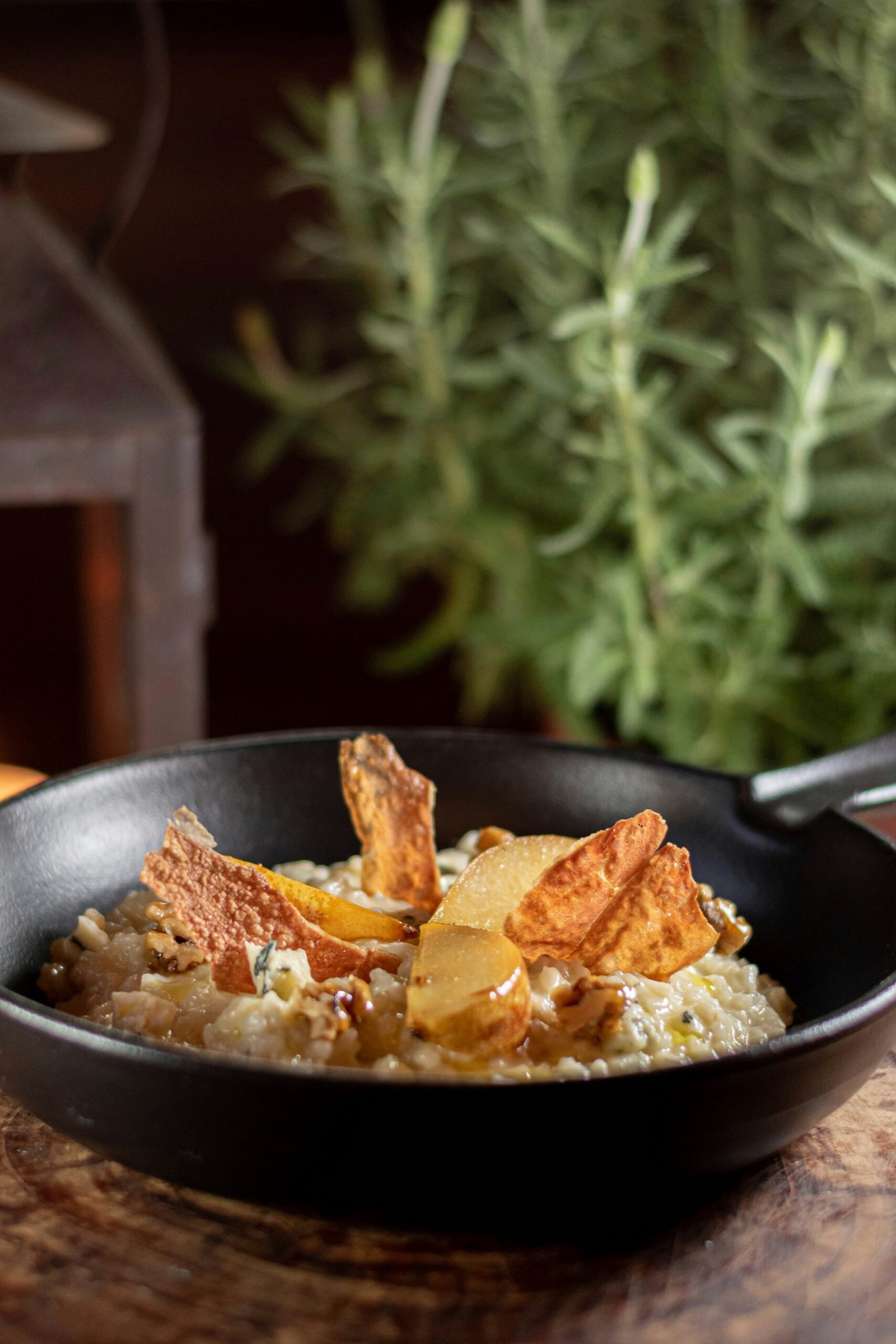
- Serve immediately: Spoon risotto into warm, wide shallow bowls. Top with reserved roasted squash cubes, crispy sage leaves, a drizzle of brown butter from the pan, and extra Parmigiano. Serve within minutes risotto waits for no one.
Nutrition Information (Per Serving, Serves 4)
- Calories: 510 kcal
- Protein: 16g
- Carbohydrates: 68g
- Fat: 20g
- Fiber: 5g
- Vitamin A: 280% Daily Value | Calcium: 30% Daily Value
Frequently Asked Questions
Can I make risotto ahead of time? Risotto is best served immediately. However, you can undercook it by about 5 minutes, spread it on a baking sheet to cool, refrigerate, and finish it the next day by adding warm broth and continuing to stir until done. This is called “par-cooking” and restaurants use this technique frequently.
Do I have to use Arborio rice? Carnaroli and Vialone Nano are both excellent alternatives and are actually preferred by many Italian chefs for their superior starch content and ability to maintain al dente texture. Carnaroli is my personal favorite.
My risotto is stiff and gluey, not flowing and creamy what went wrong? Overcooked risotto can become too starchy and stiff. Make sure you’re tasting it as you go and stopping while it still has a little bite. Also, the consistency should be loose and almost pourable off the heat it will thicken as it sits on the plate.
Can I make this vegan? Yes! Use olive oil instead of butter, vegetable broth, omit the Parmesan, and add a tablespoon of white miso paste and nutritional yeast at the end for umami depth.
Butternut Squash Risotto
Ingredients
Equipment
Method
- Preheat oven to 425°F (220°C). Toss squash cubes with olive oil, thyme, salt, and pepper. Spread in a single layer on a baking sheet. Roast for 25-30 minutes until golden and caramelized at the edges. Set aside half will go into the risotto, half on top.
- Pour broth into a medium saucepan and keep at a bare simmer over low heat throughout the entire cooking process. Adding cold broth to hot rice disrupts cooking.
- In a wide heavy-bottomed pot, heat 2 tbsp butter and 1 tbsp olive oil over medium-low heat. Add shallots and cook, stirring, for 6-8 minutes until very soft and translucent. Add garlic and cook 1 more minute.
- Add Arborio rice. Stir to coat every grain in fat. Toast for 2 minutes until the edges of the rice become slightly translucent and smell faintly nutty.
- Pour in white wine. Stir constantly until fully absorbed, about 1-2 minutes.
- Add one ladleful of warm broth (about 3/4 cup). Stir almost constantly over medium heat. When liquid is nearly fully absorbed, add another ladle. Continue for 20-25 minutes until rice is al dente tender with just a tiny bite in the center, and the consistency is loose and flowing like lava.
- Mash or roughly purée half the roasted squash and stir into the risotto during the last 5 minutes. This naturally thickens and sweetens the risotto.
- Remove pot from heat. Add 2 tbsp cold butter cut into small pieces and all the Parmigiano-Reggiano. Stir vigorously for 1-2 minutes the risotto should become incredibly creamy and glossy. Add nutmeg, taste, and season generously with salt and white pepper.
- Melt 4 tbsp butter in a small skillet over medium heat. Once golden brown and nutty smelling, add sage leaves. They will crisp in 30-45 seconds. Remove immediately and drain on paper towels.
- Spoon risotto into warm wide bowls. Top with reserved roasted squash, crispy sage, a drizzle of brown butter from the pan, and extra Parmigiano. Serve within minutes risotto cannot wait.