
If there’s one recipe that has saved me on more tired weeknight evenings than I can count, it’s this one. Peanut Sauce Soba Noodles chewy buckwheat noodles tossed with crispy tofu, fresh vegetables, and a rich, creamy peanut sauce that comes together in minutes. It’s the kind of dish that feels indulgent but is genuinely good for you, and it’s ready in about 25 minutes from start to finish.
I first made this recipe during a particularly overwhelming week when I was trying to clean up my eating but couldn’t face anything complicated. I had a block of tofu in the fridge, a bag of soba noodles in the pantry, and a jar of peanut butter that was calling my name. What came out of that improvised session has since become one of the most-requested recipes in my household and one of my personal favorites for meal prep, since it tastes just as good cold the next day.
What I love most about this dish is how it manages to be light and nourishing without feeling like diet food. The peanut sauce is creamy and deeply savory, the soba noodles have a wonderful nutty chew that’s completely different from regular pasta, and the vegetables add freshness and crunch that balances every bite. It’s the kind of bowl you actually look forward to eating.
What Are Soba Noodles And Why Are They So Good for You?
If you haven’t cooked with soba noodles before, you’re in for a treat. Soba is a Japanese noodle made from buckwheat flour and despite the name, buckwheat is not actually wheat. It’s a seed, which means it’s naturally gluten-free (as long as you buy a brand made with 100% buckwheat some varieties mix in regular wheat flour, so check the label if you’re avoiding gluten).
From a nutritional standpoint, soba noodles are significantly more interesting than standard white pasta. They contain all eight essential amino acids, making them a rare plant-based complete protein. They’re a good source of manganese, thiamine, and magnesium, and they have a lower glycemic index than refined pasta, meaning they provide steadier energy without the blood sugar spike and crash.
The flavor is subtly nutty and earthy delicious on its own, but it really shines when paired with bold, savory sauces like this peanut dressing. You can find soba noodles in the Asian foods aisle of most well-stocked grocery stores, at Whole Foods, or at any Asian supermarket.
Why This Peanut Sauce Is the Best You’ll Ever Make
The peanut sauce in this recipe is what makes everything sing. It’s built on a base of natural peanut butter smooth, with nothing added and balanced with soy sauce for saltiness, sesame oil for depth, fresh ginger for brightness, a touch of honey for sweetness, and chili flakes for heat. It’s whisked together in a single bowl and takes about two minutes to make.
The key to a great peanut sauce is getting the consistency right. Too thick and it clumps on the noodles; too thin and it doesn’t coat them properly. Vegetable broth is the secret here it loosens the sauce while adding a subtle savory depth that water alone can’t provide. Start with the amount listed in the recipe and add more, a tablespoon at a time, until the sauce pours easily but still clings to a spoon.
One thing I always recommend: taste the sauce before it goes on the noodles and adjust to your preference. Want more heat? Add extra chili flakes or a splash of sriracha. Prefer it sweeter? Another teaspoon of honey does the trick. Like it tangier? A squeeze of fresh lime juice at the end is transformative.
Ingredients You’ll Need
- Extra-firm tofu (14 oz): Pressing the tofu before cooking is essential it removes excess moisture and allows the tofu to crisp up beautifully in the pan rather than steaming. Wrap it in a clean kitchen towel and press it under a heavy skillet for at least 15 minutes, or use a tofu press if you have one.
- Soba noodles (10 oz uncooked): Look for 100% buckwheat soba if you want to keep this gluten-free. Cook according to package instructions and rinse well under cold water after draining this stops the cooking and prevents them from sticking together.
- Carrot: Thinly sliced or julienned. Adds sweetness, color, and a gentle crunch that contrasts beautifully with the chewy noodles.
- Broccoli slaw: Available pre-shredded in most grocery stores near the bagged salads. It adds texture, nutrients, and a mild brassica flavor that works wonderfully in this dish. You can substitute thinly sliced regular broccoli or shredded cabbage if you can’t find it.
- Peanut butter (⅓ cup): Use natural peanut butter with no added sugar or hydrogenated oils. The flavor is cleaner and the sauce comes together more smoothly.
- Vegetable broth (⅓ cup): For thinning the sauce to the right consistency.
- Fresh ginger (1 tablespoon): Freshly grated makes a noticeable difference here. It has a brightness and warmth that dried ginger simply can’t replicate.
- Low-sodium soy sauce (1 tablespoon): Low-sodium keeps the salt level in check the peanut butter already adds richness and the sauce can get salty quickly.
- Honey or maple syrup (2 tablespoons): Use maple syrup to keep this recipe fully vegan.
- Crushed red pepper (2 teaspoons): Adjust to your spice tolerance. Start with 1 teaspoon if you’re sensitive to heat.
- Garlic (1 clove): Minced. Pairs with the ginger to build the aromatic backbone of the sauce.
- Green onions and dry-roasted peanuts: For garnish don’t skip these. The peanuts add crunch and the green onions add freshness that lifts the whole dish.
How to Make Peanut Sauce Soba Noodles Step by Step
Step 1 Press and Cube the Tofu
Remove the tofu from its packaging and drain well. Wrap it in a clean kitchen towel or several layers of paper towels, place it on a plate, and set a heavy skillet or book on top. Let it press for at least 15 minutes 30 minutes is even better. Once pressed, cut into 1-inch cubes and season lightly with salt and pepper.
Step 2 Cook the Soba Noodles
Bring a large pot of water to a boil. Cook the soba noodles according to package instructions usually 4 to 6 minutes. Watch them carefully; soba can become mushy if overcooked. Drain and rinse immediately under cold running water, tossing with your hands to separate the noodles and stop the cooking. Set aside.
Step 3 Crisp the Tofu
Heat the canola oil in a large skillet or wok over medium-high heat until shimmering. Add the tofu cubes in a single layer don’t overcrowd the pan or they’ll steam instead of crisp. Cook undisturbed for 3–4 minutes until a golden crust forms on the bottom, then flip and cook for another 3–4 minutes. Remove from the pan and set aside.
Step 4 Sauté the Vegetables
In the same skillet, add the sliced carrot and broccoli slaw. Sauté over medium-high heat for 2–3 minutes, stirring frequently, until slightly tender but still bright and crisp. You want them to retain some texture they’ll continue cooking slightly once the warm sauce is added.
Step 5 Make the Peanut Sauce
While the vegetables cook, whisk together the peanut butter, vegetable broth, fresh ginger, soy sauce, honey or maple syrup, crushed red pepper, and minced garlic in a small bowl until completely smooth. If the sauce is too thick, add vegetable broth one tablespoon at a time until it reaches a pourable consistency.
Step 6 Combine Everything
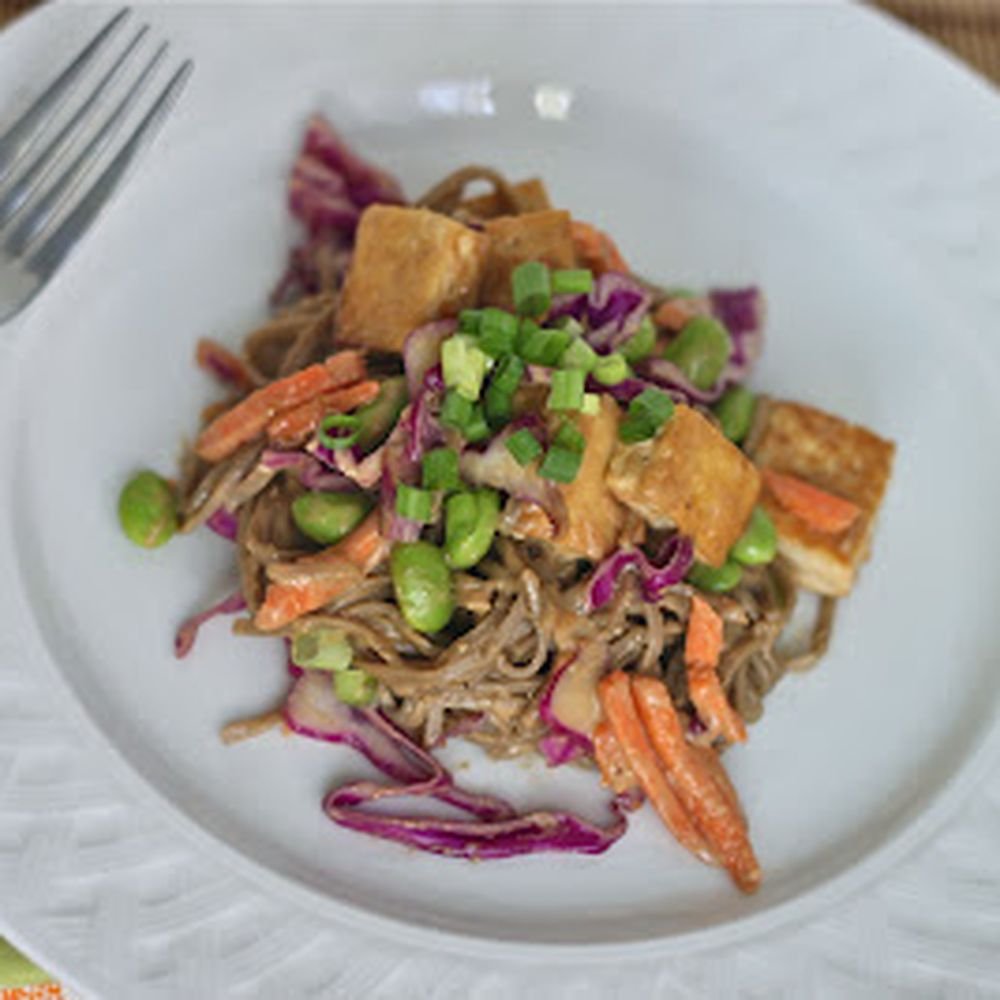
Add the cooked soba noodles to the skillet with the vegetables. Pour the peanut sauce over the top and toss everything together until the noodles and vegetables are evenly coated. Return the crispy tofu to the pan and toss gently to combine you don’t want to break up the tofu pieces. Cook for 1–2 minutes over medium heat until everything is warmed through.
Step 7 Serve and Garnish
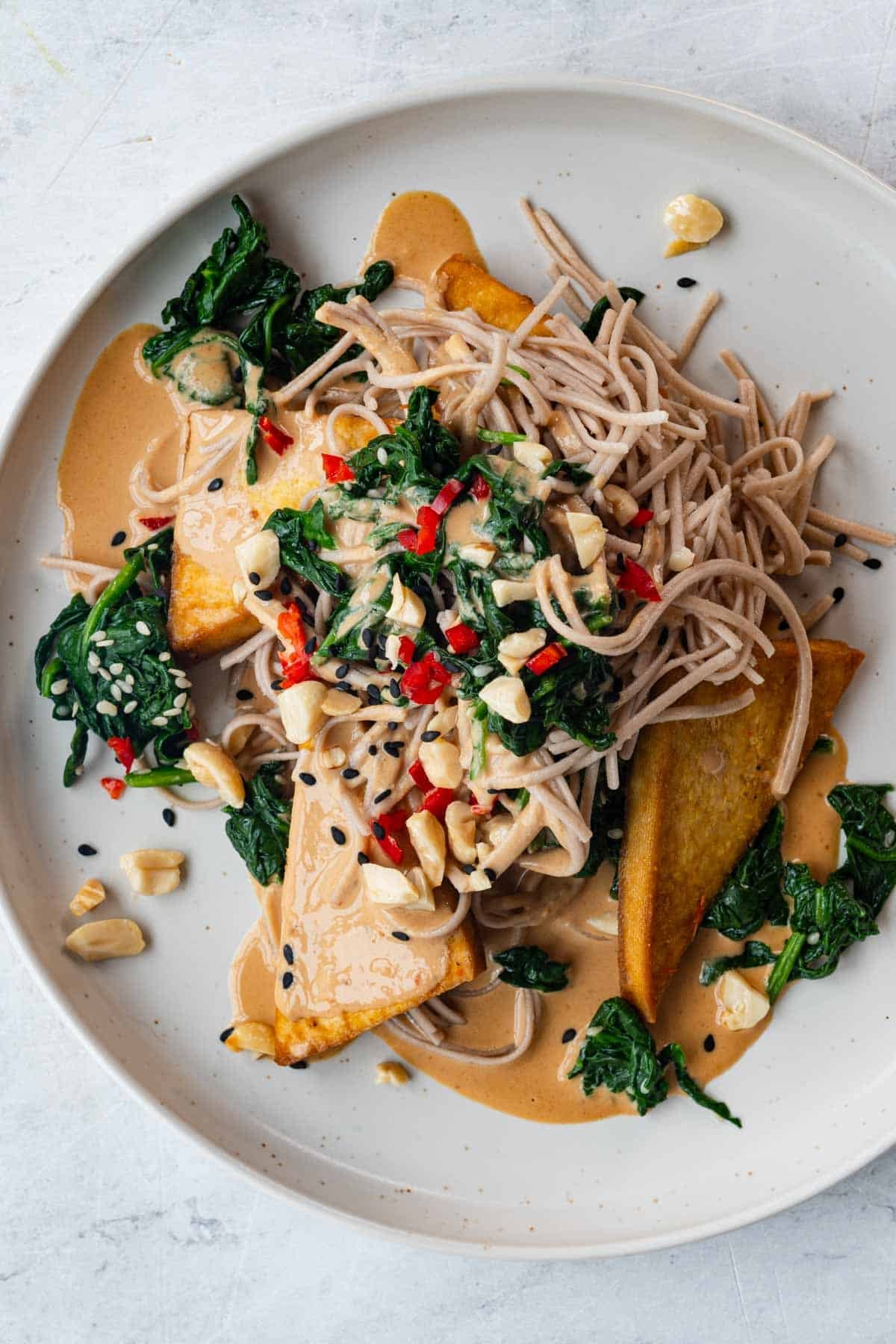
Divide the noodles into bowls and top generously with sliced green onions and chopped dry-roasted peanuts. Serve immediately while warm, or let cool completely and refrigerate for a delicious cold noodle bowl the next day.
Serving Suggestions
- Add a soft-boiled egg: Slice one in half and place it on top for extra protein and richness. The yolk mingles beautifully with the peanut sauce.
- Serve with edamame: A handful of shelled edamame tossed into the bowl adds more plant-based protein and a lovely pop of green.
- Add cucumber: Thinly sliced or julienned cucumber added fresh at the end provides a cooling contrast to the spicy peanut sauce.
- Drizzle with sriracha: For extra heat and a vibrant pop of color on top.
- Sprinkle with sesame seeds: Toasted sesame seeds add another layer of nutty flavor and a beautiful finish.
How to Serve It Cold The Perfect Meal Prep Bowl
One of the best things about this recipe is that it makes an outstanding cold noodle dish. In fact, many people prefer it cold the flavors deepen as they sit, and the texture of the noodles becomes even more pleasantly chewy after a night in the refrigerator.
To serve cold, prepare the recipe as written but let everything cool to room temperature before refrigerating. Store in an airtight container for up to 3 days. When ready to eat, give everything a good stir the sauce may thicken slightly in the fridge, so add a splash of soy sauce or a small drizzle of sesame oil to loosen it back up.
This makes it an excellent meal prep option. Make a full batch on Sunday and portion it into individual containers for easy lunches throughout the week. Cold peanut soba noodles are infinitely better than a sad desk lunch, and they travel well without needing to be reheated.
Variations and Substitutions
Make it vegan: Swap the honey for maple syrup and this recipe is completely plant-based.
Make it gluten-free: Use 100% buckwheat soba noodles (check the label many brands mix in wheat) and replace the soy sauce with tamari or coconut aminos.
Swap the protein: Not a tofu fan? This sauce works beautifully with shredded rotisserie chicken, pan-seared shrimp, or thinly sliced flank steak. For shrimp or steak, cook separately and add at the end.
Different vegetables: This recipe is very adaptable. Try thinly sliced red cabbage, snap peas, baby spinach (stir in at the very end so it just wilts), or thinly sliced bell peppers. Use whatever you have on hand the peanut sauce makes everything taste good.
Almond butter version: If you have a peanut allergy or simply prefer it, almond butter makes a wonderful substitute. The flavor is slightly milder and more delicate, but equally delicious.
Add more heat: For a seriously spicy version, add a tablespoon of chili garlic sauce or sambal oelek to the peanut sauce. It’s bold and addictive.
Tips for the Best Results
- Don’t skip pressing the tofu. This is the single most important step for getting crispy tofu. Un-pressed tofu releases steam in the pan and never develops that golden crust.
- Rinse the soba noodles well. Cold water stops the cooking instantly and removes excess starch that would make the noodles gummy and sticky.
- Cook in batches if needed. If your skillet isn’t large enough to cook all the tofu in a single layer, do it in two batches. Crowded tofu steams instead of crisping.
- Taste and adjust the sauce. Everyone’s palate is different. The recipe as written is balanced and slightly spicy, but feel free to add more soy sauce for saltiness, more honey for sweetness, more ginger for brightness, or more chili for heat.
- Use fresh ginger. Pre-ground ginger works in a pinch, but fresh ginger has a completely different aromatic quality that makes the sauce come alive.
Storage Instructions
Refrigerator: Store leftovers in an airtight container for up to 3 days. The noodles will absorb some of the sauce as they sit add a small splash of soy sauce or vegetable broth when serving to refresh the consistency.
Freezer: This recipe does not freeze well. The noodles become mushy after thawing and the tofu loses its texture. It’s best made fresh or stored in the refrigerator.
Nutrition Information (per serving, serves 4)
| Nutrient | Amount |
|---|---|
| Calories | 420 kcal |
| Protein | 18 g |
| Total Fat | 16 g |
| Saturated Fat | 2.5 g |
| Total Carbohydrates | 52 g |
| Dietary Fiber | 5 g |
| Sugars | 12 g |
| Sodium | 480 mg |
| Iron | 3.2 mg (18% DV) |
| Calcium | 180 mg (14% DV) |
Nutritional values are estimates based on standard ingredient databases and may vary depending on specific brands used.
Frequently Asked Questions
Can I make this without tofu?
Absolutely. The peanut sauce and noodles are the stars of this dish, and the protein component is very flexible. You can leave out the tofu entirely for a lighter vegetable noodle bowl, or substitute with your preferred protein chicken, shrimp, or edamame all work beautifully.
Are soba noodles gluten-free?
Not automatically many commercial soba noodles contain a mix of buckwheat and wheat flour. If you need this dish to be strictly gluten-free, look for packages that say 100% buckwheat on the label, and use tamari instead of regular soy sauce.
Can I use a different nut butter?
Yes. Almond butter, cashew butter, or sunflower seed butter (for a nut-free version) all make excellent substitutes. Each will give the sauce a slightly different flavor profile, but all are delicious.
How spicy is this dish?
As written, this recipe has a moderate heat level noticeable but not overwhelming. If you’re sensitive to spice, start with 1 teaspoon of crushed red pepper instead of 2. If you love heat, add sriracha or chili garlic sauce to the finished dish.
Can I serve this as a cold salad?
Yes, and it’s wonderful that way. Prepare everything as directed, let it cool completely, and refrigerate for at least an hour before serving. The flavors deepen beautifully overnight and it makes for a perfect cold lunch bowl.
Final Thoughts
This Peanut Sauce Soba Noodle recipe has earned its permanent place in my regular rotation for one simple reason: it makes me feel genuinely good about what I’m eating without making me feel like I’m missing out on anything. It’s satisfying, flavorful, quick, and nourishing everything a weeknight dinner should be.
Whether you’re eating plant-based, trying to incorporate more whole foods, or just looking for something different from your usual dinner rotation, this bowl delivers every single time. Make it warm for a cozy dinner, make it cold for a perfect packed lunch, and don’t be shy with the peanuts on top that crunch is non-negotiable.
If you try this recipe, leave a comment below and let me know how it went! I love hearing which variations you tried and what you served alongside it.
Peanut Sauce Soba Noodles
Ingredients
Method
- Heat the canola oil in a large skillet or wok over medium-high heat. Add the tofu cubes and cook until golden brown on all sides, about 5–7 minutes. Remove from the pan and set aside.
- In the same skillet, add the sliced carrot and broccoli slaw. Sauté for 2–3 minutes until slightly tender but still crisp.
- In a small bowl, whisk together the vegetable broth, peanut butter, ginger, soy sauce, honey (or maple syrup), crushed red pepper, and minced garlic until smooth.
- Add the cooked soba noodles to the skillet with the vegetables. Pour the peanut sauce over the noodles and toss to coat everything evenly.
- Return the cooked tofu to the skillet and gently toss to combine. Cook for 1–2 minutes until everything is heated through
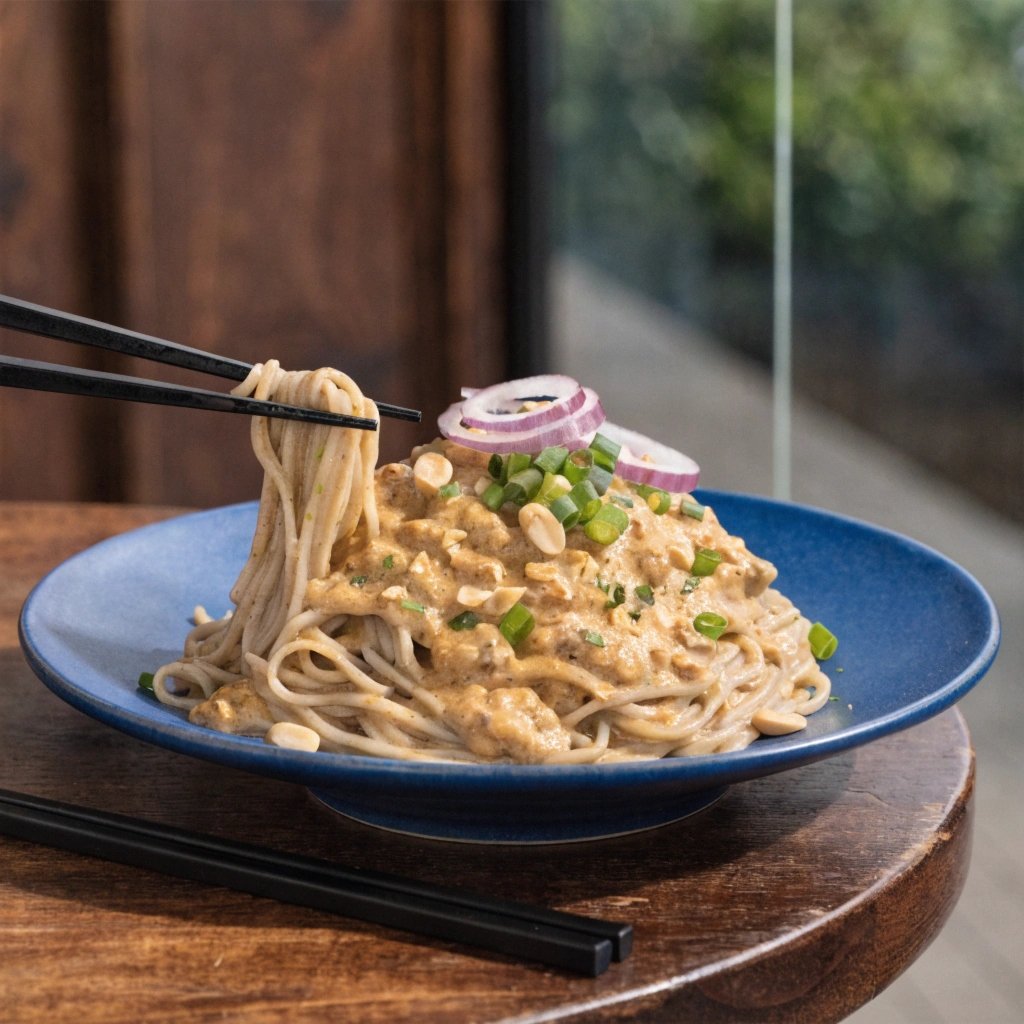
- Divide the noodles into bowls and top with sliced green onions and chopped dry-roasted peanuts. Serve warm, or chill for a refreshing cold noodle dish